
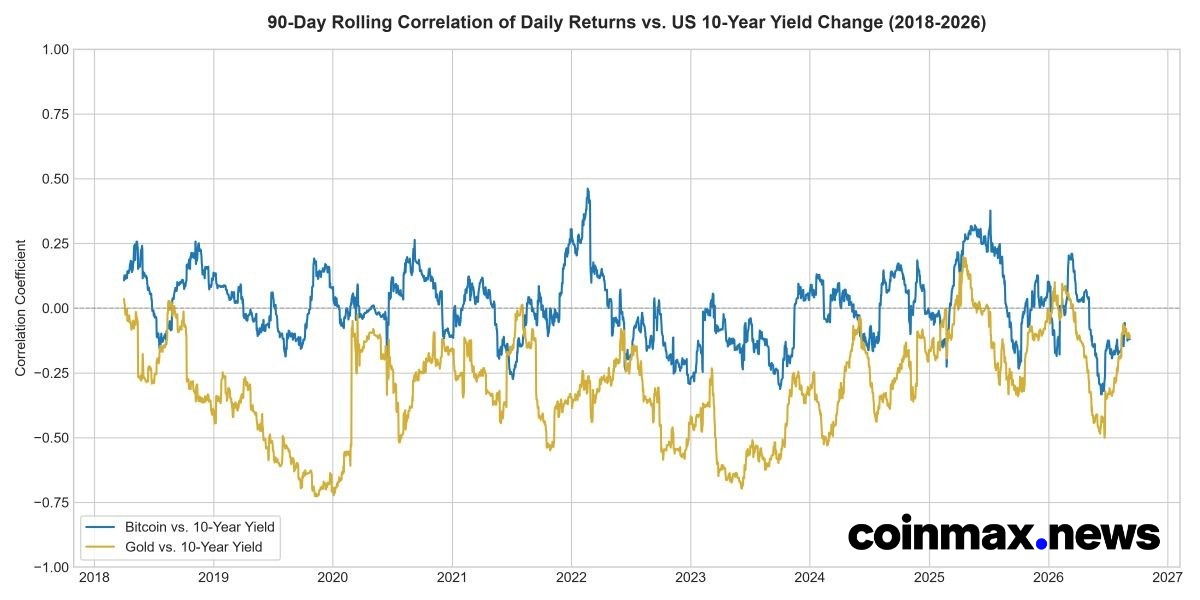
Bitcoin has shown strength alongside gold, while its connection to movements in U.S. Treasury yields has been relatively weak, CoinDesk analyzed.
According to CoinDesk, bitcoin and gold have continued to strengthen even as Treasury yields rise amid concerns over U.S. fiscal soundness. The 90-day correlation coefficient based on the two assets’ daily returns rose to 0.59, its highest level since 2020.
By contrast, the 90-day correlation coefficient between bitcoin and the yield on 10-year U.S. Treasury notes was recorded at -0.17. CoinDesk interpreted this as a signal that bitcoin has a weaker connection to the bond market and interest-rate changes than gold does.
Accordingly, CoinDesk analyzed that bitcoin could be relatively less affected than gold by rising Treasury yields even in an environment of growing U.S. fiscal uncertainty and financial-market pressure.